
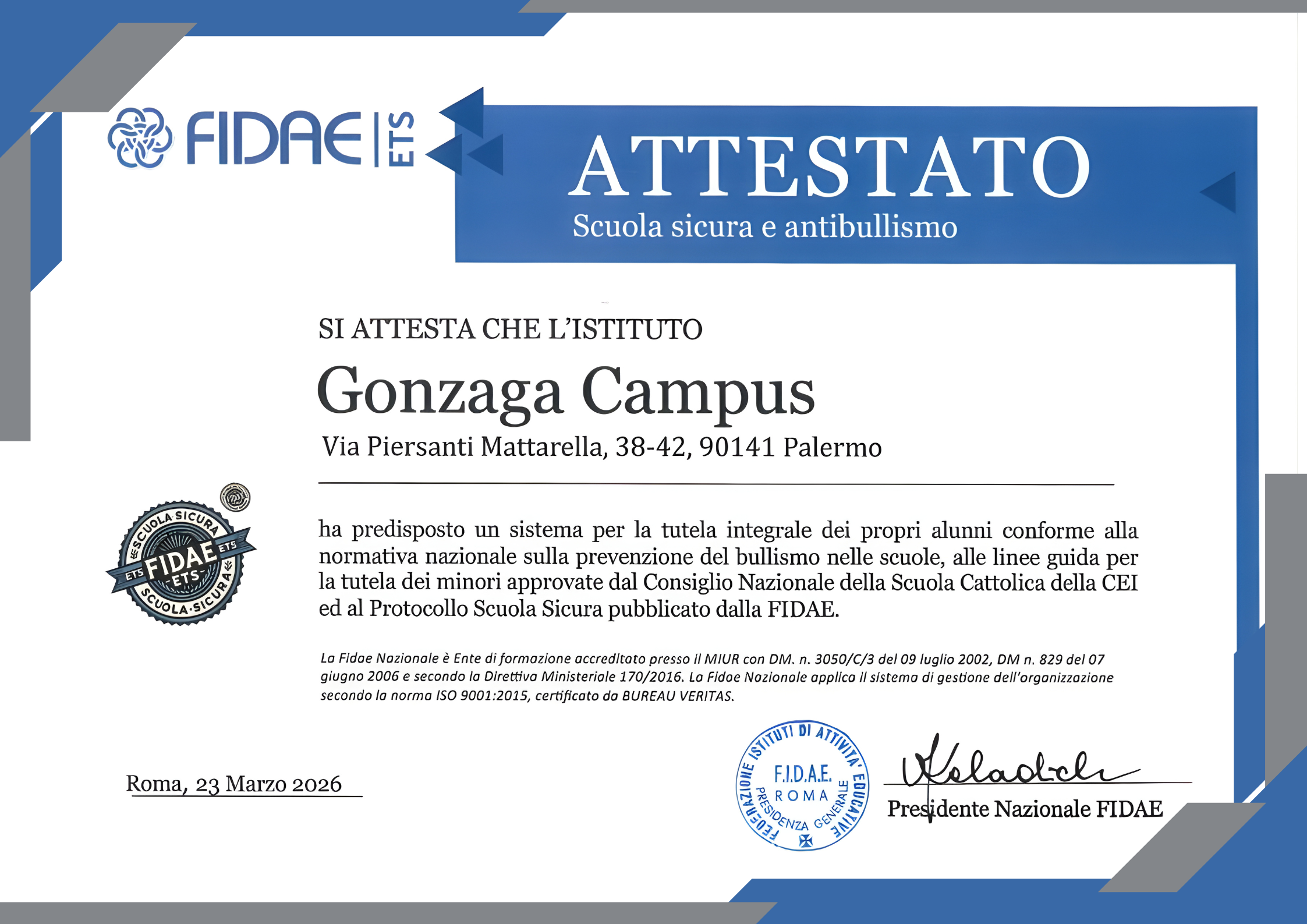
Scuola Sicura FIDAE
A concrete commitment to safeguarding minors

What the protocol is
A national system for safeguarding minors
The FIDAE “Scuola Sicura” protocol is a set of operational guidelines for Italian Catholic schools with a clear aim:
To ensure maximum protection of minors and promote safe, respectful learning environments.
Operational components of the protocol
- prevention
- training
- operational procedures
- ongoing monitoring
Principles of the protocol
The four pillars of “Scuola Sicura”
Central role of the child
Every educational action is oriented to wellbeing, rights and safety of young people.
Prevention
Protection grows from education, training and the ability to anticipate risks.
Collaboration
School, families and institutions work together to build safe environments.
Transparency and accountability
Clear procedures, verifiable and continuously monitored.
Anti-bullying sentinels: recognising distress and breaking the silence
When an episode of bullying happens, besides the person who acts and the person who is targeted, there are the people who witness it. Their behaviour can help stop the episode and make the person who was hurt feel less alone.
Referenti della tutela

Dott. Giuseppe Mannino
Referente Principale

Maestra Casina Marta
Scuola dell'Infanzia

Maestra Daniela Marchese
Scuola Primaria

Maestra Carla Marotta
Scuola Primaria

Docente Stassi Vito
Scuola Media

Docente Sofia Crisenza
Scuola Media

Docente Giulia Tomasino
Licei

Docente Rosario Calabrese
Licei

Teacher Rosanna Pieroni
ISP - Preschool

Teacher Alessia Milia
ISP - Primary School

Teacher Rosie Mburu
ISP - Middle School

Teacher Ventola Daniele
ISP - Middle School

Teacher Romeo Veronica
ISP - High School
A pact that concerns everyone
Young people’s safety is a shared responsibility.
Families, school and community are called to build a trustworthy educational community together.
Do you need to report an incident that puts a student’s safety at risk?
tutelaminori@gonzagapalermo.it
Email usCode of Conduct for Students
An anti-bullying code of ethics written with the students
How do you build a school where everyone can feel welcomed, heard, and respected? At Gonzaga Campus, the answer also takes shape through the direct participation of students.


Code of Conduct for Parents
A code of conduct for families too
Families, too, are protagonists of the path toward a safe school. Born from listening and dialogue among parents through the synodal tables, the Gonzaga Campus Code of Conduct for Parents is a shared educational guide that strengthens the school-family alliance. Participation, inclusion, kindness, solidarity, and respect for the rules become daily commitments: supporting children toward independence, using class chats responsibly, teaching digital habits by example, and facing difficulties with constructive dialogue. A call to the shared responsibility of adults, so that every student can grow in a welcoming and attentive community.


Code of Conduct for Employees
A code of conduct for staff
Safeguarding minors also depends on the daily responsibility of adults. The Gonzaga Campus Code of Conduct for Staff sets out behaviours and commitments for employees and collaborators, and extends them to religious and volunteers: respect for the dignity of every student, proper educational relationships, careful supervision, and protection of confidentiality. The document calls for the prevention of every form of bullying, violence, and abuse, sets out procedures for reporting situations of risk, and governs communication through official channels. A shared commitment that turns care for the person into professionalism, listening, and example, so that students have a safe environment in which to grow.
